I directed an adaptation of Neil Gaiman's NEVERWHERE in Chicago, which began rehearsals in March, 2010 and is now running until July 18th.
This is my blog of research, including a visit to London Above.
The earl in Neverwhere is nameless. He is so old his person and title are synonymous. The noun earl was used to distinguish nobility from those who weren’t noble, the churls. The word first appears in Beowulf as“eorla,” which here generally means a brave knight or warrior. The King Hrothgar is sitting amidst them. The earl of Earl’s court has something of the Anglo-Saxon about him. His elderly man at arms is Dagvard- his name from the Anglo-Saxon means Dag or day and vard or guard or day-guard.The other man at arms is Halvard and the meaning of the name is a bit more opaque to me. It feels like he should be either the hall guard or the night guard but hal is associated with rocks and sloping hills in my Anglo-Saxon dictionary.(Ah yes, I still have my Anglo-Saxon dictionary from a time when I thought I might be a scholar of this sort of thing so moving it from city to city and apartment to apartment has finally proved worthwhile.) Thus it is also significant that the poetry quoted in the Earl’s court is in the Anglo-Saxon mode which uses alliteration, “Brave the battling blade, flashes the furious fire . . .”
Just to speed through a little bit of English history. The early Celtic inhabitants (who themselves may have immigrated to the Island country) have been continually overrun by other people who thought it looked like a nice little green island for pillaging or possibly settling down and building a summer home. The Angles, the Saxon and the Jutes (from Jutland which refers to Denmark) are all early Viking tribes from the areas that are modern Scandinavia that over a long period of time invaded, settled then were invaded upon by other early Viking tribes who either forgot or didn’t care that these were some early cousins. The name England is derived from Angle-land.(There were others who have thought it was a nice little island the Romans and French prominent among them.) Stephen Smith in his book, Underground London, describes a Anglo-Saxon cross found underneath All Hallows that is carved with the word "Werhere" which he says Peter Ackroyd has said strongly suggests, "we are here."
There is another charming nod to this history sitting on the train platform where the Earl’s train court arrives. The beggar Lear is sitting on the platform. King Lear is based on the legend of an early Celtic king. In Shakespeare’s King Lear, the foolish king divides his kingdom and loses his power, his mind, and his daughters. Of course Lear in Shakespeare does not live but his Neverwhere namesake sits begging outside the court of a later ruler.
There is a fool in King Lear (apart from Lear) who is known only as the Fool. In Earl’s court there is a fool named Tooley. Tooley is a London street in Southwark. It is apparently a corruption of St. Olave’s church, St. Olave or Olaf being the patron saint of Norway. It was apparently the home of many wealthy citizens in the Middle Ages. Since it was close to the docks it was for a time known as “London’s Larder” It is now home to the campy London Dungeon which features actor recreations of gory bits of London history.Tooley Street was also the location of a cheap boarding house where writer George Orwell lived played the part of a beggar while he researched social conditions for his 1933 book Down and Out in Paris and London.
Richard is able to imagine the earl as he was when he was “a mighty warrior, a cunning strategist, a great lover of women, a fine friend, and a terrifying foe.” The earl’s court has undergone a similar decline to Tooley Street and similar to the end of Beowulf. (I have linked to the Gummere translation but if you get a chance read the Seamus Heaney translation.)In reading it again, was reminded of one of the final episodes of Beowulf in which the aging king Beowulf goes out to face a dragon with a young hero. There is a sense of decline in that the old King can no longer protect his people but the young hero, Wiglaf, is not up to the task and will not be the leader that Beowulf was. Together they slay the dragon but Beowulf dies of his wounds and lives only in the after-singing.
The earl is the one who assumes Door is out for vengeance he is also getting old and his memory is muddled. Hunter calls the earl’s real domain “Things lost. Things forgotten.” He has collected not only the lost detritus of London above compressed in London below but fragments of history and old alliances and knowledge of Islington which enables him to help Door.
A side note for those who are getting tired of obscure footnotes. I am looking forward to watching the first run through of the play tonight. All this research is fun but it will be nice to see the story "on its feet.."
Been a while since I posted - sorry for that. I've been enjoying some R&R after the holidays and simply marinating on some things, reading and making notes.
Under the tree for me this year was "Prince of Stories: The Many Worlds of Neil Gaiman" which is a passionate guide to Gaiman's work published before Fall 2008. A great reference of the behind the scenes development of the man's career and just a fun read. In it I learned that Mr. Croup and Mr. Vandemar make an appearance in "Mr. Punch" which means I must stop by my local comic shop and investigate.
On Saturday the 2nd, Maren and I went to the Art Institute of Chicago to visit the collection of Victorian photo-collage art that recently passed through, our interest sparked by the art of the music video costume designer Elizabeth Wislar shared with me a few months back. Ultimately the art is not relevant to our production values but was an illuminating immersion into the bizarre and fantastic minds of the idle Victorian woman, influenced heavily by Darwin and Lewis Carrol.
Last Wednesday I had a fascinating chat with Rob over some beers and BBQ. He's in the midst of some thinking and pondering on the script before diving into more writing probably in February he shared with me notes and thoughts and ideas from feedback given to him after our reading a few weeks ago. Our discussions continue to delve deeper into Richard's character arc; where is he at the beginning, where is his shift, and where does he end up. There is something very interesting to me about Richard being a blithe participant in the modern cultural machine, a cog, a brick in the wall, at the beginning of the play. He's absent minded and doesn't seem to be able to make any long term goals. He has no vision and little purpose. As he gets wrapped up into the adventures of London Below, he continues to go along with what's demanded of him, more or less with bravery but without much personal investment. He feels somehow deep inside that he must intervene and protect Door when and where he can. When he loses Anesthesia on Night's Bridge, he experiences what may be his first profound sense of responsibility. Further trust and emotional investment and even vulnerability with Door deepen his personal connection to the quest before him and in The Ordeal Of The Key there is a deeper, more radical shift.
What The Ordeal is, what it actually symbolizes and provides for Richard, has been a challenge for Rob and I to articulate. There is a tricky combination of Richard struggling with his sense of what is Real vs. what is Imagined and his being urged to off himself. What he ultimately wins, besides the key, is a grounding - he feels more deeply and truly that he has purpose and that he is Doing The Right Thing. And he gains that knowledge by rediscovering Anesthesia's necklace and confronting that guilt and loss. He then becomes something of a leader, more confident, less whiny.
Fighting the Great Beast of London is the next evolution of Richard's character, but one I wonder if it may be even more felt later, when Richard returns to London Above. At that point in the story, when Hunter dies and passes a torch of sorts to Richard, he must quickly go forward to complete the quest. Time is of the essence and self-reflection is a luxury he cannot afford. But when he finally gets what he's been wanting all along, like Dorothy, to just go home again, he's left feeling deeply dissatisfied. At the moment of killing the Great Beast and painting its blood on his face, he becomes The Warrior. How could he go back to paper pushing then?
Our next production meeting is coming soon. Between now and then I am:
rereading the script and pondering the logistics of the transitions and what they may mean tech wise
considering the many pros and cons of using liquid blood on stage - a HUGE question
investigating the use of puppets (rats, pigeons and the Great Beast) and thinking logistically of which actor will do what and how should they be seen, what are they in the world when they are manipulating a puppet
Before the year comes to a close I am excited to share with you the news of the last weekend. On Saturday the 19th our production team met for our first Production Meeting. Then on Sunday the 20th the cast assembled to read Rob's latest draft of the script, which has gone under some revision in the past month through banter between him and I.
A Production Meeting, in case it needs explaining, is a gathering of all the designers involved in the play, the writer, director, assistant director and production manager, and occasionally the artistic director of the company producing the play is there too to have a greater idea of how all resources will be used in realizing this sprawling urban fantasy. We all sit in a circle and after confirming details like dates, rehearsal schedules and deadlines, we start a creative discussion of all the aspects of the script that require that special art of stagecraft to do.
The theatrical medium is unique different than movies/television. We take the arts of sound and lighting design, the technologies of craft and sculpture and flash animation projection, the textile fashion creative art of costume design, the creative architectural magic of scenic design, the thoughtful and exciting passion of combat choreography and the inspiration of puppet techniques to try to create a cohesive world that will help us tell the story of NEVERWHERE. There were 12 of us in the room and for about four hours we bantered over everything. From the look and feel of the costuming to the use of projections to create mood and atmosphere. We always struggle with budget and scope and think out loud on how to creatively work around a our resource limits to fit the storytelling we are all so motivated to get right. It takes a group of very smart and experienced people, all of whom must be motivated by the play itself as well as inspired by their contribution to the whole, and I am overjoyed to say this meeting illustrated how right this group of collaborators is for this production. When you come to the NEVERWHERE on Lifeline's "postage stamp" sized stage, you will be transported to another world.
Sunday's reading was terrifically exciting as well. My job as director involves wrangling the various gifts of the desingers into a cohesive whole as well as casting the show and guiding those actors to perform their lines and move in a way that effectively conveys the emotional and grippingly adventurous through line of the quest. Again, all in the room are enthusiastic and engaged by the material and bring a wealth of experience, intelligence, passion and imagination to their work. Hearing it read aloud is such an exciting thing, you feel the beginnings of something incredibly special going on. After the reading, many of the cast stuck around to talk about the script, ask questions about it, wonder aloud at plot points and give Rob some things to think about as he makes another revision before we start rehearsal. One of my joys was being present when stage directions (those parts of a script that aren't character lines but describe Rob's vision on how special effects are staged) were read. My assistant director Jessica would read something along the lines of "She walks to a bookshelf with her hand outstretched. A small panel on the side swings open and DOOR reaches inside. She pulls out a sphere of brass and wood, polished copper and glass. She picks up a small platform from the desk and places the sphere atop it. The sphere begins to spin and a beam of light projects onto a nearby wall." and everyone would start laughing at me - it is apparently very funny to them that I will have to somehow make this happen. :)
I can't help but smile, sure there are demands in signing on to stear a ship this big and wild, but it feels right, and I am in a comfortable place to be filled with questions and wonderment over answers. Something my mom mentioned to me yesterday (she just read the book) is that quest stories speak to all of us because they magnify something very universal. We all face challenges not knowing whether fortune or fate will make us fly or fall in our endevour. We chose to go outside and face a world that can be dangerous, we take risks and go on quests every day. That's what makes us rock stars.
I'm proud to be a member of this team of rock stars and wish you all a very safe and splendiferous New Year of bold choices and risky adventures.
The night I made my way to check out the location in Harrods famous department store where Hunter is hired to be Door's bodyguard, my camera decided to take some shoddy pictures. Regardless...
I ended up at Knightsbridge, of course.
(Interesting tile work here at Hyde Park Corner, one stop away.)
Harrods was decked out in green not for the holidays (too early for that) but for the 70th anniversary of the movie The Wizard of Oz.
"The Meat and Fish Hall" inspires by name the image of a spacious, cavernous room. Meeting by the "fish statue" evokes a museum like space, populated by artwork and marble. Well, it's almost like that. But with the amount of intense fighting involved, there is just too much in this room! It wouldn't fit an arena - these masters of combat are fighting in cramped, ornate quarters!
The titular fish statue, I believe... the only one I found.
I wanted to hang out at the caviar bar and sip champagne, maybe eventually making my way to the oyster shucker, but I was pressed for time. So I went next door to the cheese shop, to see if I could find a contest on "silliest walk."
Imagine this scene at night, the perishables put away, and in the aisles a menagerie of stalls, vendors, smells delightful and gutwrenching, crowded with people shoulder to shoulder of all different shapes, sizes, colors, dress, dialects, shouting, pushing, vying for your attention, some looking like they'd pick your pocket, some looking like they'd slit your throat, some looking at you with hungry, cold eyes.
Being in London so close to Remembrance Day meant that the cultural heritage of war was very present. Everywhere you looked there were red "poppies" - signifiers of a society that shall not soon forget the devastating experience of violence in their City, in their communities. There are many families still living in the aftermath of World War II's blitz, less than a generation after the Armistice that marks Remembrance Day.
I saw the National Theatre's production of WAR HORSE at the New London Theatre and was heartbroken by the story. As enamored as I was by the production's incredible use of Handspring'sarticulatepuppets, seeing the horror of World War I though the eyes of Joey and Albert, the British calvary and the German soldiers, the French peasants and British countrymen, made the story rich and evocatively emotional.
My personal experience of war is removed - I've not known one person in service to the United States Army, Navy or Air Force involved in any war. I haven't been faced with the savage loss of living under siege, seeing my neighbors' homes destroyed, my proud city burning, my family taken from me, my peers hurt by PTSD or loss of limb or brain injury. I am always fascinated in the culture of being British, due in no small part by my many experiences playing Brits and directing plays about them and the dramaturgy that accompanies this work. Also thanks to public television in the States broadcasting BBC television shows. Americans are somehow aware of a common idea of what it means to be a Brit, and like racism, this (to coin a phrase) culturalism is deeply rooted in prejudice and half truths. It incorporates a wry wit, a stalwart determination, stoicism, a "stiff upper lip" and any number of fill-in-the-blank ignorant assumptions about the stereotypes we use to isolate ourselves as different from Them. But we must acknowledge that there is a stark influence of violent war on the culture of the country and its people. The legacy of war in the attitudes and traditions of the populace is a direct and clear influence on the realites of being human in that community. And like humans all over the world, it is passed on, from parent to child, generation to generation.
I'm going to let you folks who've never been on the inside of a New Theatrical Adaptation Process in on a little secret: the process of creating a live performance of a well-loved novel involves a bunch of planning.
Much of it happens before the actors go into rehearsal. The writer, the director, the designers and (hopefully, which is not always the case) the dramaturg, discuss the characters in a different way than the author might. We have to take the author's art of fiction writing and extrapolate that into a totally different format that exists physically outside the imaginations of the audience. We manifest, to the best of our abilities, the author's intentions as we interpret them into a physical presence. I've often felt that New Adaptations don't get the same respect a New Work gets, but they really are different beasts.
When enjoying a good read, like NEVERWHERE, the imagination fills in all sorts of detail thanks to careful and skillful storytelling and the reader's own contribution to making the world feel real. You have your favorite parts of the book because you personalize them, you fill in the detail based on your own experiences, parts speak to you or don't and the book becomes a part of you in some way. Which speaks to taste as well - I've traveled with Roland Deschain on many a commute and I voraciously read Dinah's story but never was able to connect with Lila du Cann, for example. That's me. You may have different hooks into a story, which is why reading is such a special, unique and deeply personal experience.
A few years before I joined the Lifeline Theatre Ensemble, the company producing this theatrical production of NEVERWHERE, they did a new adaptation of the entire Lord of the Rings trilogy (years before the movie franchise) and experienced a wide range of feedback from deeply passionate fans. "Gimli wields a halberd, not a guisarme. Please change this immediately." is one comment I heard about. Imagine hearing that as a director when your "coffers" are exhausted and safe fight choreography is well established a week before opening!
Here we are also dabbling in fan fiction that has a ravenously passionate following. In distilling the story to a reasonable amount of pages to perform onstage we are bound to disappoint some people. That is an unavoidable casualty of the art. As Stephen King says, to paraphrase, you have to kill your darlings when editing, and editing we must do.
As a director I must coordinate the efforts of all of these collaborators - designers, writer, researcher, actors, puppeteers - to create an approximation of what NEVERWHERE means to me. In the interest of fleshing out my ideas, I engage my collaborators in ongoing dialogue. Feldenkrais practitioners encourage curiosity - Remain Curious - and it is a practice I try to honor, as I find it a fruitful one.
Here then is a snippet of dialogue between me the Director, Rob the Writer, and Maren the Dramaturg about some of the characters of NEVERWHERE. I've edited the conversation a tad, and tagged Rob's responses in blue and Maren's in red. I hope you enjoy this discussion and that it sparks some thoughts of your own. Better to know a fan feels adamantly about something before budget and design is beyond adjustment!
The tunneling in London didn't really begin until the early 19th century, so London Below is a mythical place that had some other existence before it moved into the sewers and tube and shunt tunnels. Some ideas?
I think London Below's origins far pre-date the modern tunneling as we know it. When traveling into the Labyrinth, Richard refers to construction by giants, kings of mythical ancient London, Gog and Magog, door with hinges taller than a man. And we must remember that London Below is not precisely *literally* under the city Above. There are passages of travel describing (one of my favorite passages): "They walked through daylight and night, through gaslit streets, and sodium-lit streets, and streets lit with burning rushes and links." Even the roofs that Old Bailey loves so much are somehow part of what is known as London Below. Thinking too literally of London Below being made of *just* sewers and tunnels steals much of the magic of the realm, somehow. It doesn't allow for LB to be "built of lost fragments of London Above: alleys and roads and corridors and sewers that had fallen through the cracks over the millenia". One of the reasons why (in my opinion) the BBC miniseries fails to capture the magic of Gaiman's London Below is that it's all so very literal... LITERALLY sewers and underground tunnels and stuff. I think we have the opportunity with clever design, theatrical design, to encompass so much more, to SUGGEST so much more, and *if we're lucky* open the audience's imagination to so much more than cameras in abandoned sewers could ever allow us to imagine.
I love getting to be part of this conversation. I was actually thinking about how tricky the shift from novel to play is on so many levels. Gaiman gets to evoke and describe, he does not have to create sets or say lines in the same way that a director or an actor has to make choices (granted this is muddied by the BBC production and his involvement there) but so much of the casual references like gog and magog can be casually thrown in and yet the actor who had to be that or say that has to understand something about the world for him/herself even if there is still something ambiguous for the audience.
Early early early London below and Gog and Magog this makes the references very early since Gog is in the Bible and in the bible it seems to be referring to something old. There are also multiple Gogs in the Bible but I suspect the one referred to since it is paired with Magog places it in Revelation where they are (I think) demons or spirits that are part of an attack against God which fits with Islington. There is also a Gog referred to in Ezekiel but both books are visions and intensely tied to prophesy so they are fairly opaque when you read them
Here is a link to Biblical references from a concordance. I am sure there is more digging I can do on that one. I'll have to see if there are pre-christian references to Gog and Magog or similar names anywhere. http://refbible.com/g/gog.htm
I love the idea of Neverwhere sort of slipping side by side our world overlapping and existing without our knowledge (it is a little like the worlds in Philip Pullman occupying the same space at the same time in a different dimension though not so literal). I have been sort of fixating on the title. Neverwhere. The people who exist in London Below call it London Below. Interestingly they are aware of London Above they simply don't pay it much mind I suppose in the same way we think about the homeless. But neverwhere is everywhere, it is clearly under other cities as well. Neverwhere evokes neverland. Never as though something not only is not but had never been (which is what happens to Richard when people fail to notice him) and where. Where is a question word not a place name or even a place pronoun. It is slippery just like the realm we are entering. (Note: from the unreliable Wikipedia: According to the legendaryHistoria Regum Britanniae, of Geoffrey of Monmouth, London was founded by Brutus of Troy after he defeated the incumbent giants Gog and Magog and was known as Caer Troia, Troia Nova (Latin for New Troy), which, according to a pseudo-etymology, was corrupted to Trinovantum. Trinovantes were the Iron Age tribe who inhabited the area prior to the Romans. Geoffrey provides prehistoric London with a rich array of legendary kings, such as King Lud ( see also Lludd, from Welsh Mythology ) who, he claims, renamed the town CaerLudein, from which London was derived, and was buried at Ludgate.)
The Sewer Folk and the Rat Speakers could be more contemporary. One of the things the tube was meant to do was to relocate the masses of destitute poor living in the city's alleys but housing for them never came to fruition. So some Rat Speakers may be Victorian. During the Blitzkrieg, Londoners sought refuge in the Tube and even formed small communities (as we do). So some of these folk may have a 40's feel to them. Then there's Anesthesia, poor girl, who may have come from the 60's or 70's or 80's.
Rat speakers- there is a certain lost boys quality to the rat speakers isn't there? (not to force too much of a neverland comparison) They slip through the cracks and become rat speakers which would fit with the more contemporary feel but perhaps date back as much as the turn of the century. I'll have to look into stories with talking rats. I can't think of any but their might be.
There is also that sort of history of traders/gypsies/vagrants travelling up and down rivers that feels like it might be tied to the sewer folk or the rat speakers since essentially the river became the sewer for London as rivers often do for big cities so that they weren't always sewer people or perhaps sewer people supplant river people in this world.
I've been picking my own brain about our Marquis De Carabas. He's a mysterious figure and one we could make any combination of choices about. Something I'm turned onto right now is that he was a Roman soldier in Londinium at the very beginnings of the city. Gaiman describes his dark black face and I've cast a caucasian actor in the role, but I wonder what a thousand years of bartering immortality for your soul will do to a guy. I also caught at the London Transport Museum that early public transportation were men rowing single skiffs in the Thames before it became too disgusting to get close to. They would sing on the river side about their comfortable, cheap and quick transportation and often, when he had you out in the middle of the river, shiv you and take your wallet and dump you overboard. Sounds like early Marquis to me. I also heard a story during my tour of the Tower of London about a Bishop imprisoned in the tower who had enough money to have a number of casks of wine delivered to him, which he used to host a big party for the tower guards. When the guards passed out, he used the ropes binding the casks together to fashion a 30 foot long rope he usede to climb out the window and escape. Again, very Marquis De Carabas to me.
I want to quickly point out that Gaiman describes de Carabas's face just as "extremely dark," not specifically as "black." It may seem a irrelevant distinction, but it's something that's stuck with me. It's a wording compellingly vague enough to allow the creators of that graphic novel to make the (interesting, I'll give them) choice to have his face just be featureless inky nothingness. (Well, with lips... shudder) One can probably assume, given the casting of the miniseries, that, yes, Gaiman envisioned a black man, but that's not exactly what he *wrote*. I think you're very much on the right track to start thinking about his face as being cast in a darkness of the soul more than a literal "color black"-osity.
De Carabas is interesting as a name. In the Perrault version of Puss in Boots the cat makes his master who is a millers son the fictional name of the Marquis De Carabas
Here it is in translation http://www.pitt.edu/~dash/perrault04.html and I'll need to go back and look but I think Bruno Bettleheim talks about the Moral ambiguity of the characters in Puss in Boots which might be interesting. Perrault himself was 17th C so that might give some time insight into De Carabas and whether or not his title is one he has found it convenient to assume.
The name was also used as a title for a novel by Sabatini who wrote Scaramouche and Captain Blood
http://www.amazon.com/Marquis-Carabas-Raphael-Sabatini/dp/0755115465/ref=sr_1_1?ie=UTF8&s=books&qid=1257878653&sr=8-1
I haven't read it but the Amazon description places it during the French revolution and includes bloody death so that could also be important for the Marquis.
I also didn't find Carabas on any Maps so it seems to be a made up principality but I can look a bit more.
I believe Gaiman has acknowledged that the Marquis de Carabas as a name was taken from Puss in Boots.
It would make sense that Gaiman had acknowledged the Puss in Boots bit - he's too clever not to be drawing on all kinds of things.
I'm keen on the marquis being almost in a way older than some of the older LB peeps. They all seem to share a form of immortality that makes the aging process slower or that at some point in their lives they became immune to the effects of time. Being raised from the dead is a different matter and maybe one that has been employed by them a time or two before but strikes me as a rare and dangerous and special magic. I make a distinction then between "being little affected by time" and "regeneration". Make some sort of sense?
The Earl suffers from onset of dementia. Old Bailey seems rather spry - physically quite strong and agile and mentally a bit softened by age but generally with it. Marquis de Carabas is dark - makes me think of Dorian Grey. Croup and Vandemar seem none the worse for wear for their age, aside from maybe an encroaching obsolescence, Hunter too for that matter. Hammersmith seems demi-god like.
Yeah, I've long been interested in the "rules" of aging in LB. Don't quite understand them myself, but it feels (to me, at least) like aging is more a function of the mind (strength or lack of will) than of time. And it may be a function of when/how they were born into or fell into London Below.
Yes, to me, the marquis and C&V are some of the oldest folks we meet, regardless of their appearance. Maybe even Hunter. And that they're all older than Old Bailey, for sure (he seems, to me, frozen at the age he fell into LB), and the Earl. (Note: Rob, if you could explain this notion about Old Bailey stuck-ed-ness in time in the comments section, I'd be grateful to hear it.)
I like your thoughts Rob on the age issue. It is interesting because I always felt Door in spite of appearing young was older or at least had experienced time differently. Perhaps it is because she feels so self-possessed in contrast to Richard who is in a world he doesn't understand.
C&V I have always wondered exactly what they are since they are not human and have been around a very long time. The names are interesting too. Croup I suppose there is the children's respiratory illness of the same name. Vandemar feels vaguely dutch like Vander mar. I think vander is from the and then it would be a province or location but mar feels like the english mar and marring things would fit and I couldn't find any Dutch meanings for mar on line. I love the pairing too. There is something about pairs like this menacing and complimentary to each other.
Hunter feels very ancient- Artemis like but also like those prechristian green men.
The earl is interesting in that he is just the Earl no further patronymic implying perhaps that he is old enough or important enough to just need the one name.
I still need to think more about Old Bailey. I suppose Old indicates he is old. I suppose it is appropriate that that is the British criminal court. It seems to date to about the 1580s but was burned and rebuilt (the building that is). I will think more about the character as I reread.
I remember thinking it was interesting in the TV adaptation that the Marquis de Carabas was killed in a way that had him visually looking like that Davinci illustration of man (sort of on a wheel). I suppose it allowed them to avoid the crucifixion appearance which is heavily laden with symbolism and put him more in that rakish humanist world though I agree he feels older than the Renaissance.
Hammersmith has me recalling something from a linguistics class about ancient place names in a place like England (or elsewhere) how they often referred to some feature of geography or important person so Oxford was a place where oxen could ford the river. Cambridge was Cam's bridge.
Hammer smith feels like the ancient smithy that he is but there are such great mythological smiths like Hephaestus but surely there are Celtic and Norse smiths as well.
Something else in my craw is that the aristocracy of London Below would have come down and stayed down around the Victorian era, so gentry like the Porticos could be of that era. Yet the Earl is definitely from the Medieval age. Hrm. I dunno. Definitely they are archetypal characters and all and one shouldn't think too hard about they all fit. But design wise and storytelling wise I want to have some assurance that I get the background of these people.
I agree that the Earl wants a highly Medieval feel. There were "Earls" in England from as far back as 1020 or so, so there's lots of time leeway there.
It's interesting that you see the Portico clan as Victorian. I always envision them as Renaissance-era. Like Portico was a contemporary (friend?) of Leonardo da Vinci. An inventor not decades before his time, but *centuries*. Mid-millennium steampunk, almost.
I felt the Earl as Medieval and I confess I also felt that the Portico's felt Renaissance especially in their sort of grand humanism but Victorian gives you different scope for the sorts of technology in their world. I felt their home had astrolabes and Galileo thermometers and sextants all those hints of our earliest and most beautiful technologies. Also because Portico is an Italian name and the Renaissance started in Italy perhaps I made the assumption.
**********************************
And on and on it goes! Really. I met with our costumer, Elizabeth Wislar, to chat about preliminary stuff before a sketch is even drawn and she wondered aloud if Croup and Vandemar were Cerberus missing their third head. In a brief car ride Rob and I bantered about Richard being awarded the title Warrior and why this title is given to him, why is he not the next Hunter - perhaps because he kills the Beast of London to save his friends. de Carabas seems rather confident about the blood ritual Hunter asks Richard to perform, how does he know what will happen? Are there other Warriors or is Richard THE Warrior, like Hunter was Hunter?
Then Elizabeth sent me this YouTube clip, which I can't stop watching. It has a wonderful sense of movement and the collage-like artwork is both creepy and beautiful.
Richard, while trotting alongside Door, Hunter and the Marquis de Carabas, looking for Earl's Court, finds himself in the pedestrian tunnel connecting the Monument and Bank tube stations. I had to see this.
That hallway entrance in the center of the picture is on the Westbound platform of the Monument District and Circle lines. Join me wont you?
And that's about it. Not much to write home about right? Well, that's the thing. You see Richard go through these intense periods, right before this little trek he had actually been crying thinking he had been abandoned by Door, Hunter and the marquis, and then he finds himself somewhere very familiar and ordinary. Then something extraordinary happens to him again.
He's heard and seen this phrase hundreds of times and understands the danger implicated. How could it be any more dangerous than what he knows? It is right there in front of him, the same scene he's experienced over and over - the wondering which of the rails is the Really Bad one, the scuttling of small brown mice as they search for remnants of lunches. What in the world could actually be THAT dangerous? A grabby smokey tentacle from another dimension, that's what.
All on his way to
in the quest to meet the
See what I mean? Richard has got to hold on to his sanity in a very real way as he experiences the convolution of all he knows to be true and real and unquestionable.
Frankly, I think we can relate to that. It is a part of the process of living. Richard just gets the quadruple extra large version.
About four months ago I decided A) I need a vacation, B) I should travel somewhere and C) I should go to London. Many many years ago, when I was in high school, way back before I knew I'd be acting and directing plays, I went with a humanities class for a 10 or 12 day trip. What I recall of the trip is a cacophony of teenage dramas and the striking images of the touristy highlights - Stonehenge, Bath, Shakespeare's grave, the Tower of London. What interests me for this go around includes the Must See attractions of London but focuses more on the City and experience of London as the setting of Neil Gaiman's book, NEVERWHERE.
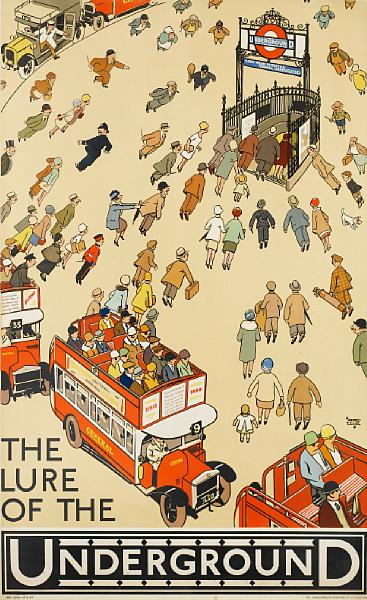
Chicago theater is rather anglophilic. We love plays about Britain's history. We like savvy upper crust Brit detectives and scurrilous cunning Brit villains. Dialect geeks live and breathe for the nuanced sounds of the British isles and we've sighed over and over again at the romance of the English countryside. NEVERWHERE is something a bit different though. As a modern urban fantasy we are drawn into a London that is current, vibrantly chaotic and full of life. The City of London is itself as much a character in the story as anyone else. Gaiman names characters after streets and tube stations. We are surrounded by her, steeped in her streets and alleyways, and most importantly, lured underground to explore her mysteries.
I will be touring London Above and London Below for inspiration, clarification, research and just shear geeky pleasure. I have been digging through my copy of NEVERWHERE and tagging locations in my very own guide to NEVERWHERE's London. Click on any of the blue tags in the map below for a brief description of the area's significance to the story.
This map will continue to grow and be edited with further detail, including photos, as I visit them. This blog will catalog those experiences and their relevance, but will also be a space for any and all pre-production reference, announcements, inspirations and ideas.
The London we create onstage will be an approximation, but one that I am interested in feeling right - very urban, very current, somehow ancient and modern at the same time. Starting with the City for inspiration seems like the right way to begin, as this is a London story.